Flow ADMS & Flow Direction
Last Change: 2026-01-27 #JT
How to generate a Flow ADMS
This video tutorial will show you how to set up in Fusion to generate a isotropic Flow ADMS and an anisotropic Flow ADMS with Flow directions:
Why using Flow ADMS
While traditional ADMS and TPMS excel mechanically, fluid applications introduce two fundamental challenges:
-
Unbalanced labyrinths: the two internal chambers exhibit different flow resistances
-
High pressure drop: complex geometry causes excessive fluid resistance and pump energy demand
FlowADMS is a new geometry specifically designed to address these limitations.
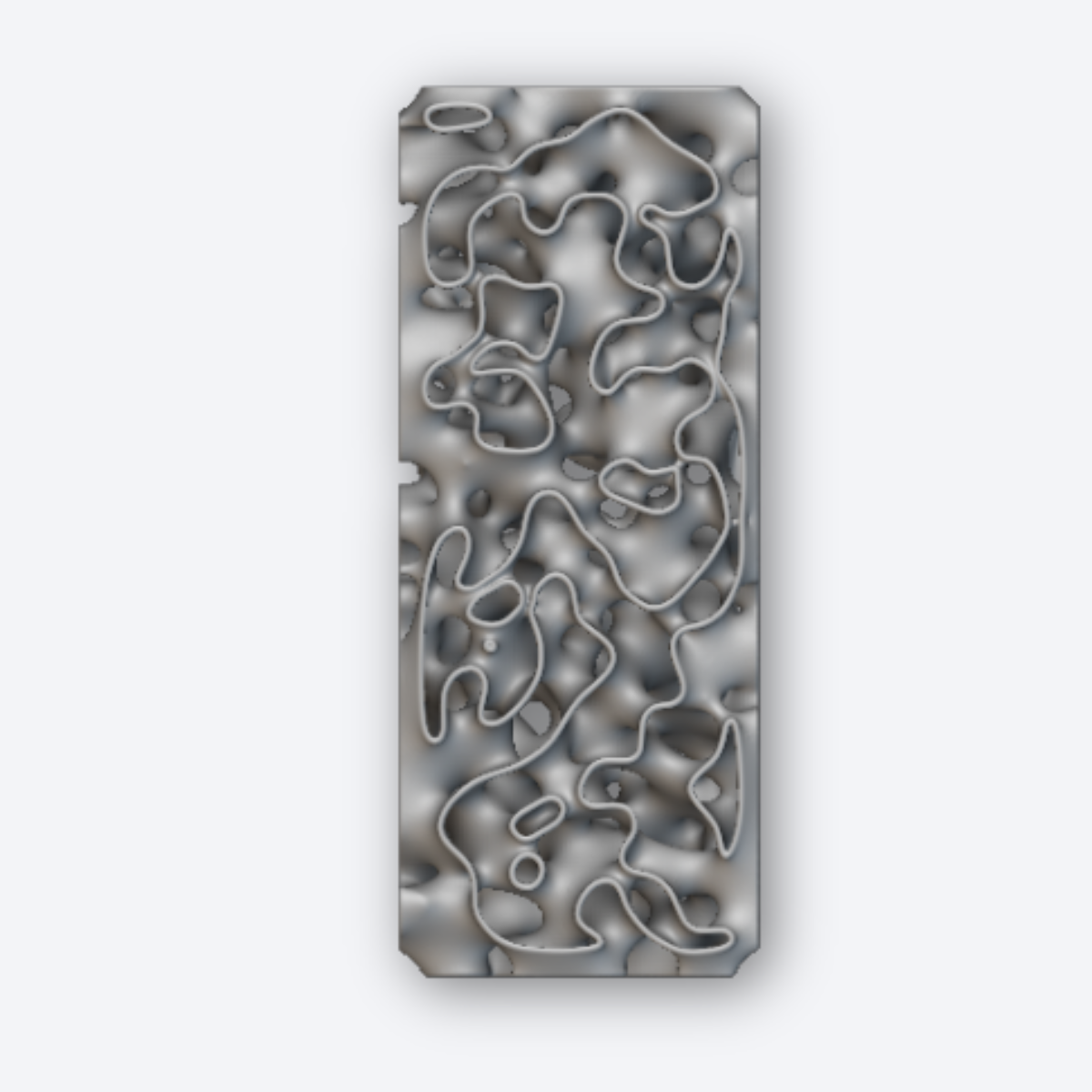
What’s different about Flow ADMS
-
A newly developed, flow-inspired minimal surface
-
Optimized using energy-based algorithms
-
Designed to balance fluid resistances between both internal chambers
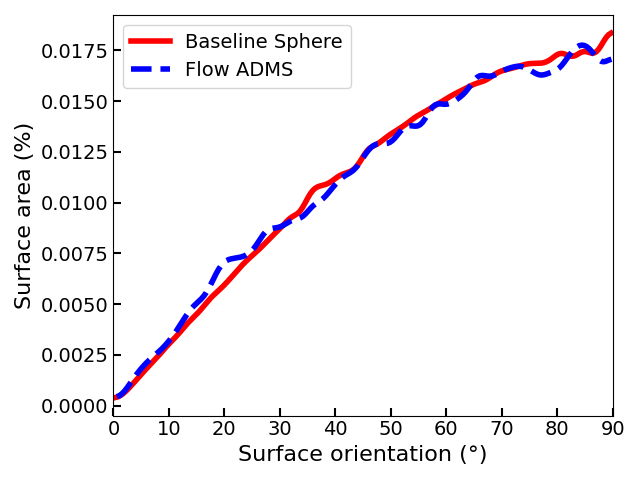
Despite its flow-oriented shape, Flow ADMS remains near-isotropic, maintaining the mechanical advantages of ADMS while radically improving fluid behavior. A Gauss map visualizes the distribution of surface normal directions across a geometry and is therefore commonly used to evaluate the isotropy or anisotropy of a structure, clearly indicating the near-isotropic nature of Flow ADMS.
Flow ADMS offers:
-
Nearly identical pressure drop in both chambers
-
Significantly reduced overall fluid resistance
-
Lower pump energy requirements
Flow ADMS enables ADMS-based designs to move confidently into heat exchangers, cooling systems, and other fluid-driven applications.
Flow Direction -Defined Flow Paths
FlowADMS solves the baseline fluid challenges. FlowDirection takes optimization a step further.
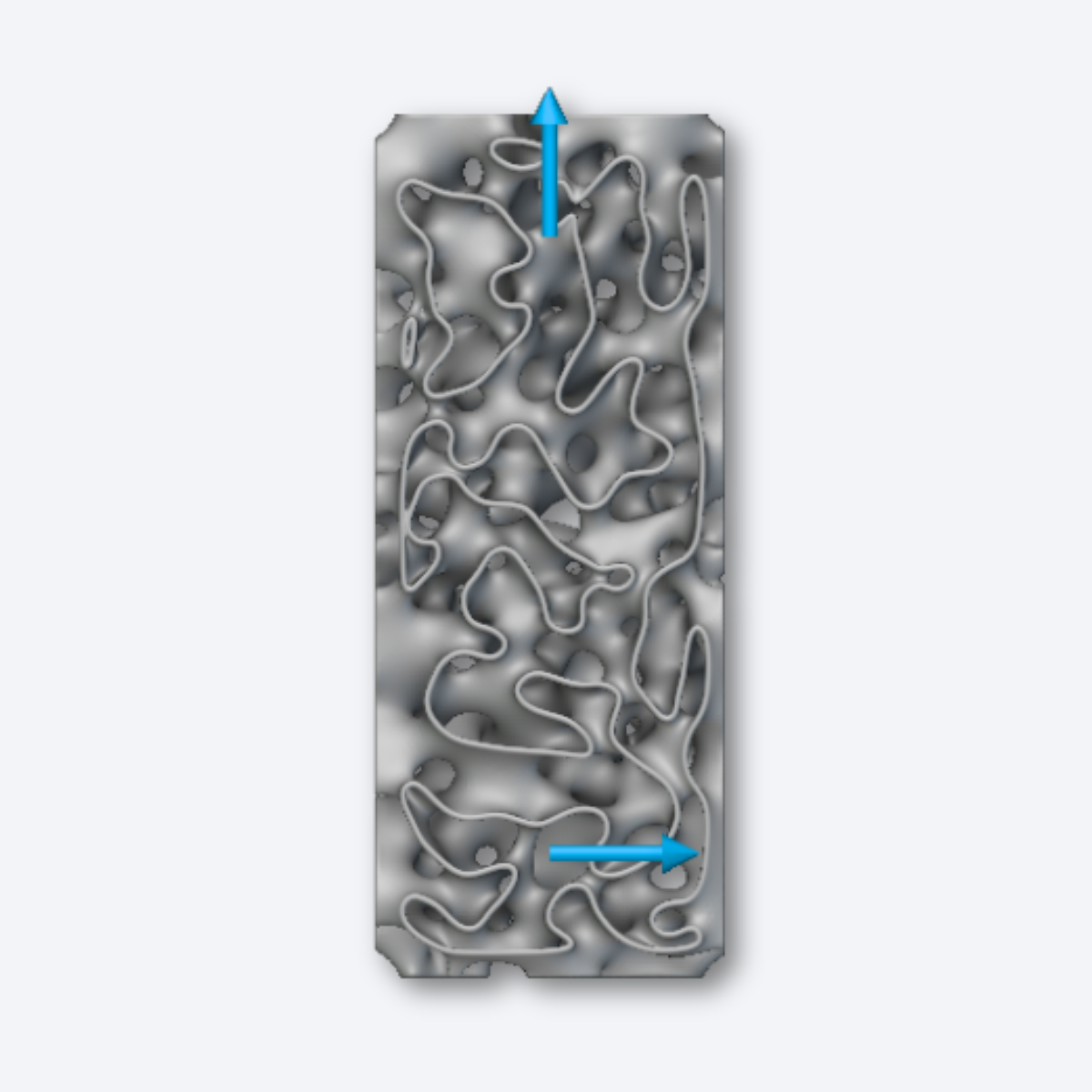
This advanced feature allows users to define preferred flow paths via vector fields.
How it works
-
Users specify vectors at various points across the geometry
-
Vector direction defines the desired flow direction
-
Vector magnitude controls how strongly the surface aligns to the flow
The geometry automatically adapts to follow the prescribed flow paths, introducing intentional anisotropy for fluid performance.
Proven performance gains
In a heat exchanger comparison against a TPMS gyroid:
-
Flow Direction applied uniformly along one axis
-
Achieved greater than 20% lower pressure drop
-
Maintained equal thermal performance
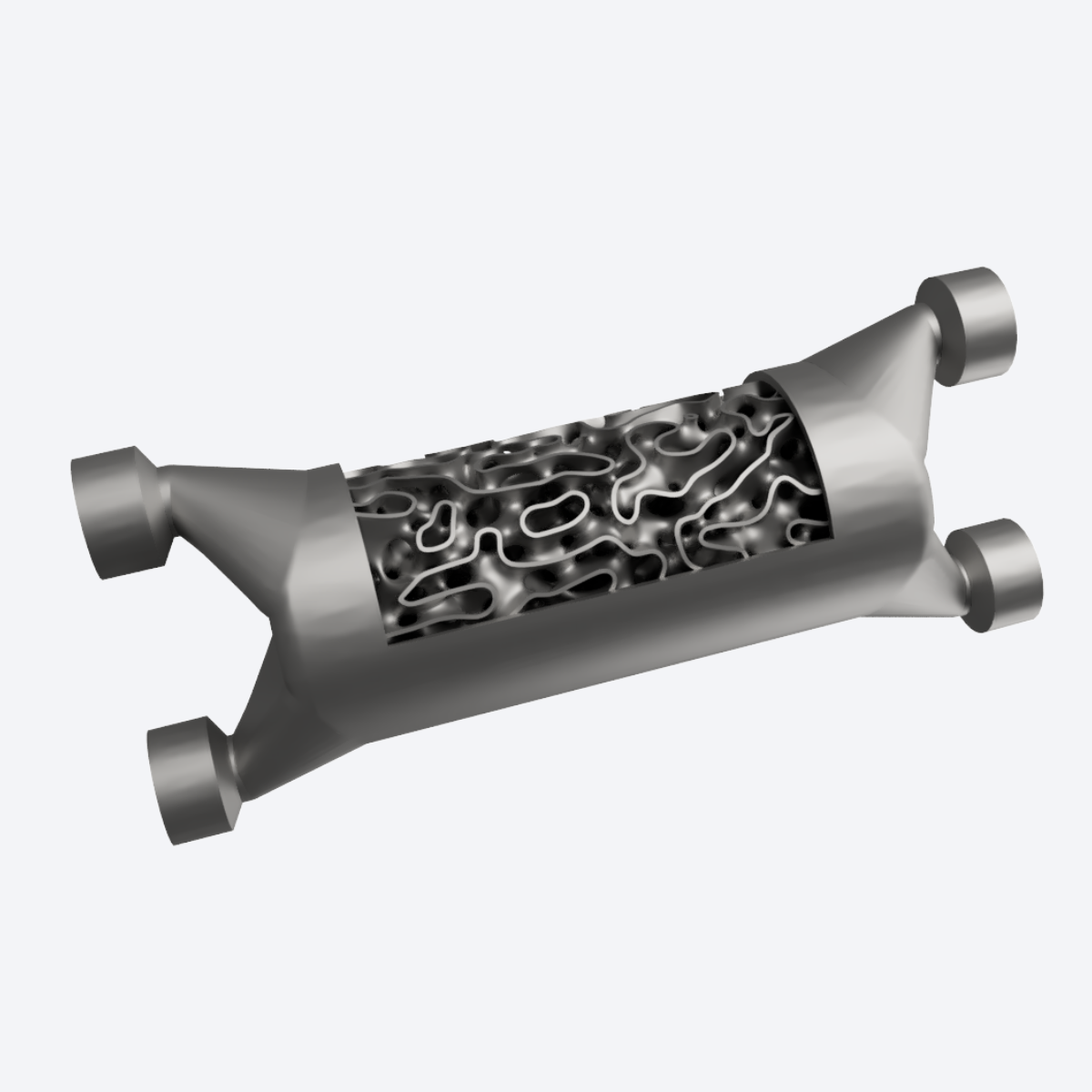
With CFD-driven vector fields, even greater reductions in fluid resistance are expected.
Flow Direction transforms Flow ADMS from an optimized geometry into a design-driven flow system.
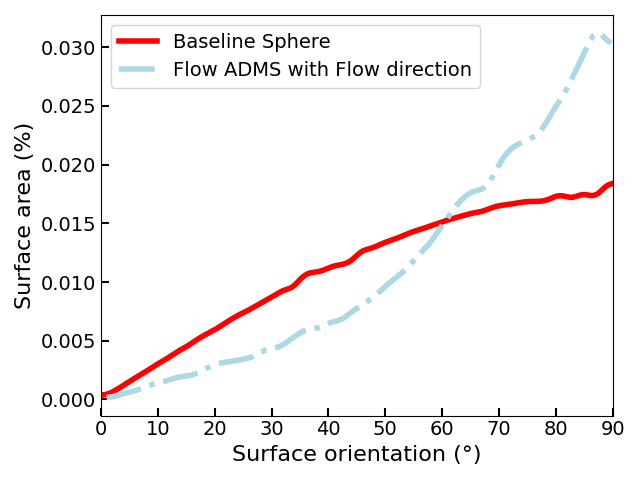
Beyond fluid applications, we are also looking forward to exploring how flow direction can introduce anisotropy into geometry, enabling better guidance of stress distribution and achieving longer lifetimes under mechanical loading. The following Gauss map shows the anisotropicity of Flow ADMS with Flow directions: